
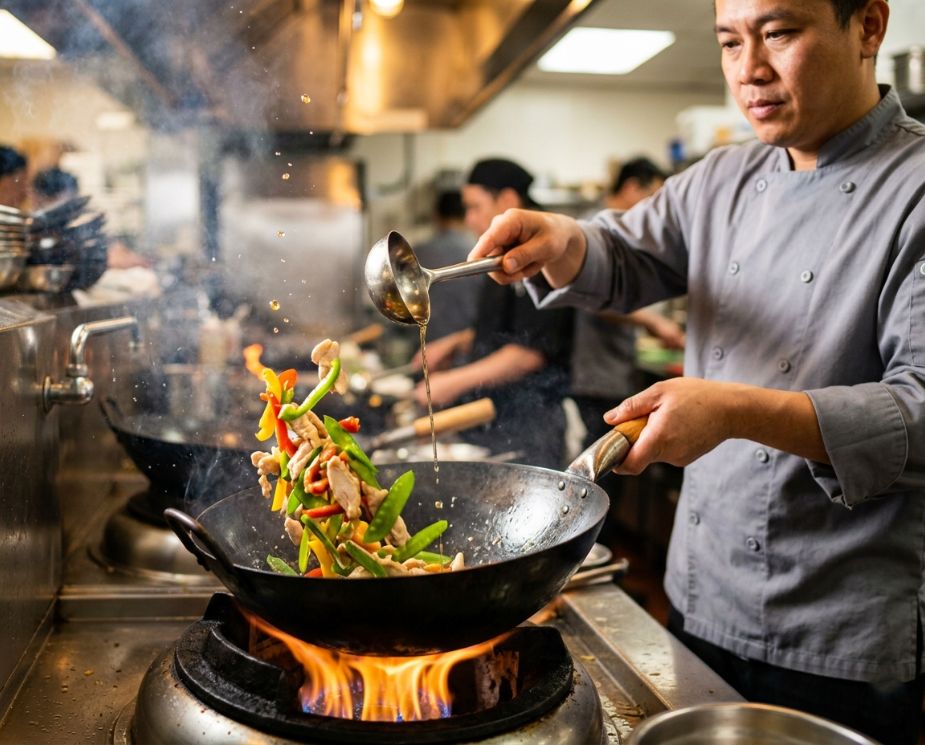
Stir-frying is one of the fastest and most demanding cooking methods in commercial kitchens, requiring oils that can withstand extremely high temperatures without breaking down.
The best oils for stir-frying are those with high smoke points, neutral flavours, and strong heat stability, such as vegetable oil and sunflower oil. Choosing the right oil ensures better flavour, faster cooking, and consistent results during busy service hours.
For restaurants and takeaways offering Asian cuisine or fast-cooked dishes, selecting the right oil is essential for both performance and efficiency.
Why Oil Choice Matters in Stir-Frying?
Unlike other cooking methods, stir-frying involves:
- Very high heat
- Rapid cooking times
- Constant movement of ingredients
This puts significant stress on cooking oil. Using the wrong oil can lead to:
- Burnt flavours
- Excess smoke
- Poor food texture
- Faster oil degradation
That’s why professional kitchens must use oils specifically suited for high-heat cooking.
Key Characteristics of Stir-Frying Oils
1. High Smoke Point
The most important factor is the oil’s smoke point, the temperature at which it starts to burn.
High smoke point oils:
- Perform better at extreme heat
- Produce less smoke
- Maintain food quality
2. Neutral Flavour
In stir-frying, the ingredients and sauces should stand out, not the oil.
Neutral oils:
- Do not overpower dishes
- Work across multiple cuisines
- Provide a consistent taste
3. Heat Stability
Oils used in commercial kitchens must remain stable during repeated high-temperature use.
Stable oils:
- Break down more slowly
- Last longer
- Deliver better value over time
Best Oils for Stir-Frying in Commercial Kitchens
1. Vegetable Oil
A top choice for many professional kitchens.
Benefits:
- High smoke point
- Neutral flavour
- Cost-effective
- Widely available
Explore options in our vegetable oils range within the oil & fats category.
2. Sunflower Oil
Another excellent option for stir-frying.
Benefits:
- Light texture
- High heat tolerance
- Clean taste
Ideal for kitchens that need consistent, reliable performance.
Explore options in our sunflower oils range.
3. Blended Cooking Oils
Some kitchens use blended oils designed for commercial cooking.
Benefits:
- Balanced performance
- Improved durability
- Cost efficiency
Available in bulk formats for high-volume operations.
Oils to Avoid for Stir-Frying
Not all oils are suitable for high-heat cooking.
Avoid:
- Low smoke point oils
- Strongly flavoured oils (for general stir frying)
- Oils that degrade quickly under heat
These can negatively affect both food quality and kitchen efficiency.
Choosing the Right Oil for Your Kitchen
When selecting oil for stir-frying, consider:
1. Volume of Cooking
High-volume kitchens should prioritise:
- Cost-effective oils
- Bulk packaging options
2. Type of Cuisine
Different cuisines may require:
- Neutral oils (general use)
- Specific oils for flavour (in some dishes)
3. Cost Efficiency
Balancing performance with price is key.
Browse our full oil & fats category to find oils that match your kitchen’s needs and budget.
Best Practices for Stir-Frying with Oil
To get the best results:
- Preheat the oil before adding ingredients
- Avoid overheating beyond the smoke point
- Use clean oil for better flavour
- Do not overload the pan or wok
These practices improve both food quality and oil lifespan.
Packaging Considerations for Stir-Frying Oils
High-volume stir-frying kitchens benefit from:
- Drum packaging for cost savings
- Bulk oil supply for continuous use
- Easy dispensing systems for efficiency
Learn more in our guide on choosing the right oil packaging for your kitchen.
Conclusion
Choosing the right oil for stir-frying is essential for achieving high-quality results in commercial kitchens. Oils with high smoke points, neutral flavours, and strong heat stability deliver the best performance under pressure.
By selecting the right oil and sourcing it in the right format, foodservice businesses can improve efficiency, maintain consistency, and control costs.
