
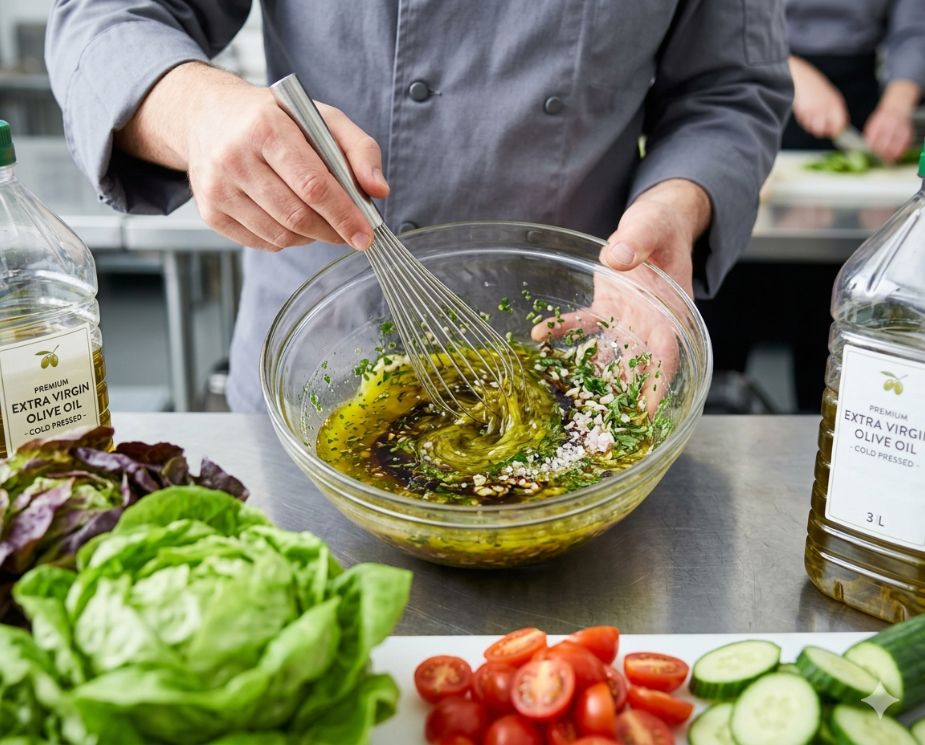
In foodservice, salad dressings are more than just a finishing touch; they play a key role in flavour, presentation, and overall customer experience.
The best oils for salad dressings are those with balanced flavour, smooth texture, and high quality, such as olive oil and light vegetable oils. Choosing the right oil helps enhance taste, improve consistency, and elevate menu offerings.
For restaurants, cafés, and catering businesses, selecting the right oil for dressings can make a noticeable difference in both quality and customer satisfaction.
Why Oil Choice Matters for Salad Dressings?
Unlike frying, where heat performance is critical, salad dressings rely heavily on:
- Flavour profile
- Texture and mouthfeel
- Visual appeal
The wrong oil can:
- Overpower ingredients
- Create an unpleasant texture
- Affects overall dish quality
That’s why choosing the right oil is essential for achieving well-balanced dressings.
Key Characteristics of Oils for Salad Dressings
1. Flavour Profile
Oils used in dressings can range from neutral to rich and bold.
- Neutral oils → allow other ingredients to shine
- Flavourful oils → add depth and character
Choosing the right balance depends on your menu style.
2. Texture and Consistency
A good dressing oil should:
- Blend smoothly with vinegar or citrus
- Create a stable emulsion
- Provide a pleasant mouthfeel
3. Quality and Freshness
Since oils are not heated, their natural flavour is more noticeable.
High-quality oils:
- Deliver better taste
- Improve dish presentation
- Enhance perceived menu value
Best Oils for Salad Dressings in Foodservice
1. Olive Oil
One of the most popular choices for salad dressings.
Benefits:
- Rich, distinctive flavour
- Smooth texture
- Ideal for vinaigrettes and premium dishes
Explore options in our olive oils range within the oil & fats category.
2. Light Vegetable Oil
A versatile option for neutral dressings.
Benefits:
- Mild taste
- Cost-effective
- Works well in large batches
Suitable for kitchens producing high volumes of dressings.
3. Sunflower Oil
A great balance between performance and neutrality.
Benefits:
- Light flavour
- Smooth consistency
- Blends easily
Ideal for consistent, everyday use in foodservice.
Choosing the Right Oil for Your Menu
1. Match Oil to Dish Type
- Premium salads → Olive oil
- Bulk dressings → Vegetable or sunflower oil
- Light dishes → Neutral oils
2. Consider Cost vs Quality
Higher-quality oils can:
- Enhance perceived value
- Improve customer satisfaction
However, cost-effective options are better for high-volume production.
Browse our oil & fats category to find the right balance for your kitchen.
3. Think About Batch Preparation
For kitchens preparing dressings in bulk:
- Use oils that blend consistently
- Ensure stable emulsions
- Maintain flavour across batches
Best Practices for Making Salad Dressings
To achieve consistent results:
- Use fresh, high-quality oil
- Mix thoroughly for proper emulsification
- Store dressings correctly
- Avoid using overheated or previously used oil
These steps help maintain both quality and food safety.
Packaging Considerations for Dressing Oils
For foodservice operations:
- Bottled oils → Easy for small batch preparation
- Larger containers → Better for bulk production
- Bulk supply → Cost-effective for high-volume kitchens
Learn more in our guide on choosing the right oil packaging for your kitchen.
Conclusion
Choosing the right oil for salad dressings is essential for delivering flavour, consistency, and quality in foodservice. Whether you opt for olive oil for premium dishes or neutral oils for large-scale preparation, the right choice can elevate your menu and improve customer satisfaction.
By selecting high-quality oils and sourcing them efficiently, kitchens can create better dishes while managing costs effectively.
