
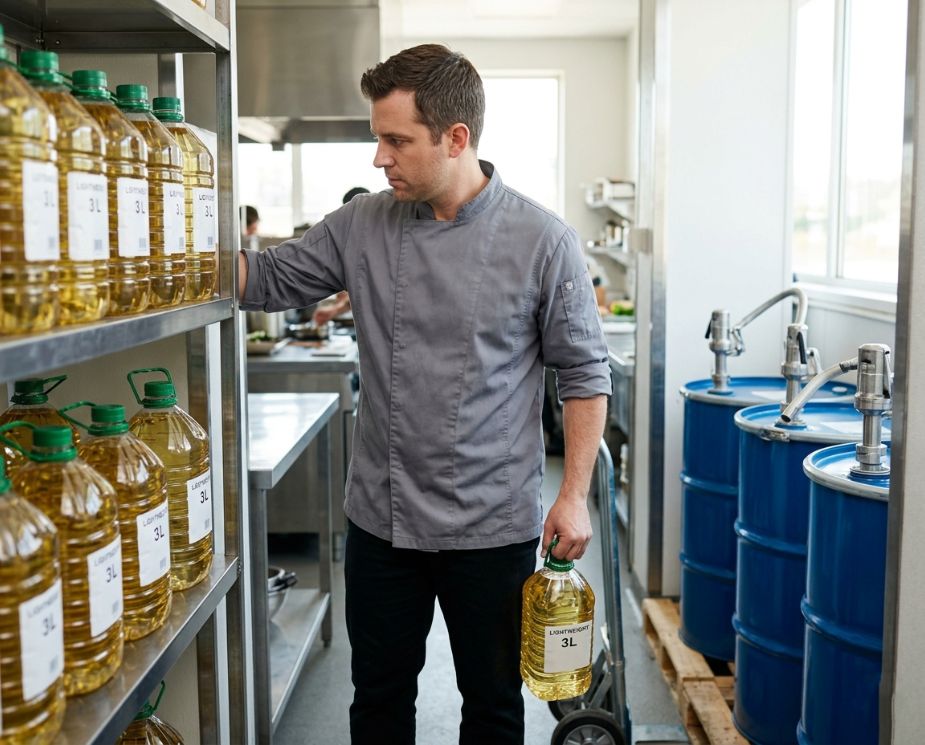
In commercial kitchens, choosing the right cooking oil is important, but selecting the right oil packaging format is just as critical for efficiency, cost control, and daily operations.
Drums, bottles, and bulk oil supplies each offer different advantages depending on your kitchen size, usage volume, and storage capacity. High-volume kitchens often benefit from bulk or drum packaging, while smaller operations may prefer bottled oils for convenience and control.
Understanding these options can help you reduce waste, improve workflow, and make smarter purchasing decisions.
Why Oil Packaging Matters in Commercial Kitchens?
Packaging affects more than just storage; it directly impacts:
- Cost per litre
- Ease of handling
- Storage space
- Waste management
- Operational efficiency
Choosing the wrong format can lead to higher costs, unnecessary waste, and inefficiencies during busy service hours.
Types of Oil Packaging Explained
1. Bottled Oil (Small Packs)
Typically available in sizes like 1L to 5L, bottled oils are widely used across many kitchens.
Best for:
- Low to moderate usage kitchens
- Precise portion control
- Easy handling and storage
Limitations:
- Higher cost per litre
- More packaging waste
- Requires frequent reordering
Ideal for smaller restaurants, cafés, or kitchens with limited storage.
2. Oil Drums (Medium to Large Volume)
Drums are a popular choice for busy commercial kitchens that require a consistent oil supply.
Best for:
- Medium to high-volume operations
- Reducing cost per litre
- Fewer deliveries and stock management
Limitations:
- Requires proper storage space
- Heavier and harder to handle
- Needs pumps or dispensing systems
Commonly used in takeaways, restaurants, and catering businesses.
3. Bulk Oil Supply (High-Volume Solution)
Bulk oil systems are designed for large-scale kitchens with continuous frying operations.
Best for:
- High-volume kitchens (e.g., fast food, large takeaways)
- Maximum cost efficiency
- Reduced packaging waste
Limitations:
- Requires dedicated storage infrastructure
- Initial setup can be higher
- Not suitable for small kitchens
This is the most efficient option for operations focused on long-term cost savings.
How to Choose the Right Oil Packaging for Your Kitchen?
1. Consider Your Usage Volume
- Low usage → Bottles
- Medium usage → Drums
- High usage → Bulk systems
Matching packaging to demand prevents overstocking or shortages.
2. Evaluate Storage Space
Limited storage may restrict your ability to use drums or bulk oil systems. Always consider:
- Available space
- Safety requirements
- Accessibility during service
3. Factor in Cost Efficiency
Larger packaging formats typically offer:
- Lower cost per litre
- Reduced delivery frequency
- Better long-term savings
Explore cost-effective options within our oil & fats category to find the right fit for your business.
4. Think About Handling and Workflow
During busy service hours, ease of use matters:
- Bottles → Easy to pour and control
- Drums → Require pumps or decanting
- Bulk → Fully integrated systems
Efficient handling can improve speed and reduce staff effort.
5. Waste Management and Sustainability
Bulk and drum packaging:
- Reduce plastic waste
- Lower environmental impact
- Improve sustainability credentials
This is becoming increasingly important for modern food businesses.
Matching Packaging with the Right Oil Type
Different oils are available in different packaging formats. For example:
- Vegetable oils → Available in bottles, drums, and bulk
- Sunflower oils → Often used in larger volumes
- Olive oils → Typically in smaller packs for controlled use
Browse our full range of vegetable oils, sunflower oils, and olive oils to find packaging options that suit your kitchen needs.
Best Practices for Managing Oil Packaging
- Store oils in a cool, dry place
- Use proper dispensing equipment for drums
- Rotate stock using FIFO (first in, first out)
- Train staff on safe handling procedures
These practices help maintain oil quality and improve kitchen efficiency.
Conclusion
Choosing the right oil packaging is a strategic decision that affects cost, efficiency, and day-to-day kitchen operations. Whether you opt for bottles, drums, or bulk supply, aligning your choice with your kitchen’s needs can lead to significant long-term benefits.
By selecting the right packaging and sourcing high-quality oils, foodservice businesses can streamline operations and maximise profitability.
