
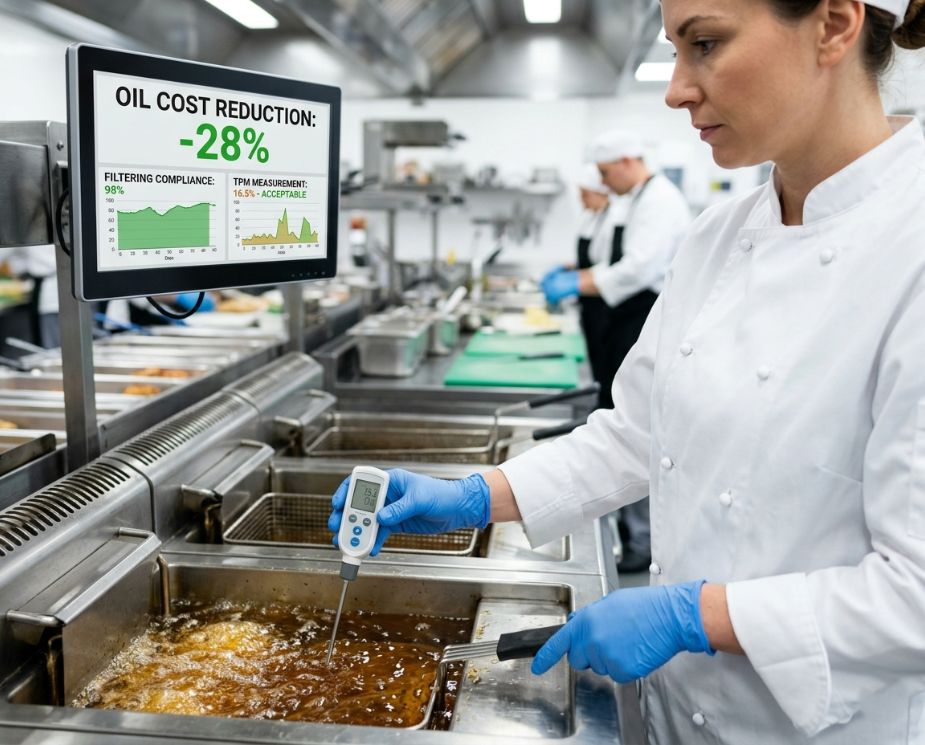
For high-volume commercial kitchens, cooking oil is one of the most significant ongoing expenses. Without proper management, oil costs can quickly eat into your profit margins.
To reduce oil costs, kitchens need to focus on smarter practices such as regular filtration, choosing the right oil type, controlling frying temperatures, and buying in bulk. Small operational improvements can lead to substantial long-term savings.
By optimising how oil is used, stored, and purchased, foodservice businesses can maintain quality while significantly lowering costs.
Why Oil Costs Add Up Quickly?
In busy kitchens such as takeaways and restaurants, oil is used continuously throughout the day. Costs increase due to:
- Frequent oil replacement
- Poor oil management practices
- Using the wrong type of oil
- Inefficient purchasing decisions
Without a strategy, these factors can lead to unnecessary waste and higher operational expenses.
Proven Ways to Reduce Oil Costs
1. Filter Oil Regularly
Oil filtration is one of the most effective ways to extend oil life.
- Removes food particles and impurities
- Prevents premature oil breakdown
- Improves frying performance
Kitchens that filter oil daily can significantly reduce how often oil needs to be replaced.
For more detailed guidance, see our blog on oil filtration in commercial kitchens.
2. Choose High-Quality Cooking Oils
Lower-quality oils may seem cheaper upfront, but degrade faster, leading to more frequent replacements.
High-quality oils:
- Last longer under high heat
- Maintain consistent performance
- Deliver better value over time
Explore reliable options in our oil & fats category, including vegetable and sunflower oils designed for professional kitchens.
3. Control Frying Temperatures
Overheated oil accelerates breakdown and increases waste.
Best practices:
- Maintain consistent frying temperatures
- Avoid overheating during idle periods
- Use thermostatically controlled fryers
Proper temperature control can extend oil life and reduce consumption.
4. Avoid Cross-Contamination
Mixing different types of food (e.g., fish and chips) in the same oil can reduce its lifespan.
To prevent this:
- Use separate fryers where possible
- Regularly remove food debris
- Follow proper frying procedures
This helps maintain oil quality for longer periods.
5. Use the Right Oil Packaging
Choosing the right packaging format can also impact costs.
- Bottles → Higher cost per litre
- Drums → Better value for medium usage
- Bulk supply → Lowest cost for high-volume kitchens
Learn more in our guide on choosing the right oil packaging for your kitchen.
6. Buy Oil in Bulk
Bulk purchasing is one of the simplest ways to reduce costs.
Benefits include:
- Lower price per litre
- Fewer deliveries
- Better stock control
Browse bulk options available in our oil & fats range to maximise savings.
7. Train Staff on Oil Management
Staff play a key role in reducing oil waste.
Training should include:
- Proper frying techniques
- Oil filtration routines
- Identifying when oil needs changing
Even small mistakes can lead to unnecessary oil loss over time.
8. Monitor Oil Condition Instead of Guessing
Instead of changing oil based on fixed schedules, monitor its condition:
- Colour
- Smell
- Smoke levels
- Performance
This ensures oil is used efficiently without replacing it too early.
Long-Term Benefits of Reducing Oil Costs
Implementing these strategies leads to:
- Lower operating expenses
- Improved profit margins
- Better food consistency
- Reduced waste
- More sustainable kitchen practices
For high-volume kitchens, the savings can be substantial over time.
Choosing the Right Supplier
Working with a reliable supplier ensures:
- Consistent product quality
- Competitive pricing
- Availability of bulk options
- Support for your business needs
Explore our full range of cooking oils in the oil & fats category to find cost-effective solutions tailored for foodservice businesses.
Conclusion
Reducing oil costs in high-volume commercial kitchens is not about cutting corners; it’s about working smarter. By improving oil management practices, choosing the right products, and optimising purchasing decisions, kitchens can significantly lower expenses while maintaining high standards.
With the right approach, oil becomes a controllable cost rather than a constant drain on profitability.
