
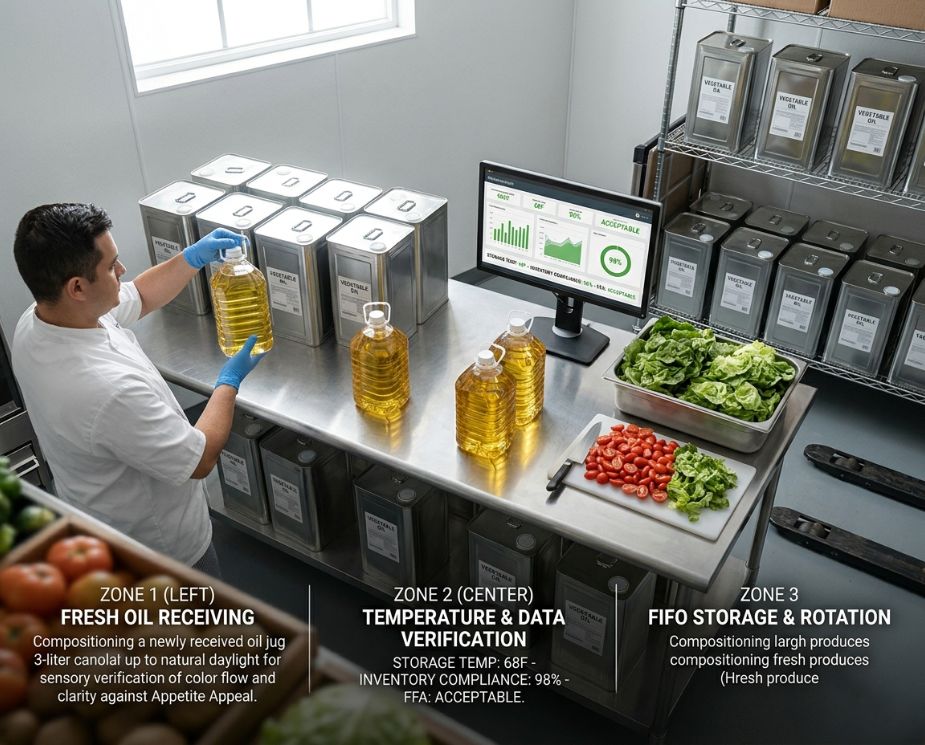
In commercial kitchens, cooking oil is used daily, but how it is stored is just as important as how it is used.
Safe storage of cooking oils involves keeping them in cool, dry, and dark conditions, using proper containers, and following hygiene practices to prevent contamination and degradation. Proper storage helps maintain oil quality, extend shelf life, and ensure food safety compliance.
For foodservice businesses, getting this right can reduce waste, improve efficiency, and protect both customers and reputation.
Why Proper Oil Storage Matters?
Incorrect storage can lead to:
- Faster oil degradation
- Loss of flavour and quality
- Increased costs due to waste
- Potential food safety risks
Even high-quality oils can perform poorly if not stored correctly.
Key Principles of Safe Oil Storage
1. Store in a Cool, Dry Place
Heat and moisture accelerate oil breakdown.
Best practice:
- Keep oil away from ovens and fryers
- Store in a temperature-controlled area
- Avoid humid environments
2. Protect Oil from Light Exposure
Light can degrade oil quality over time.
- Use opaque containers where possible
- Keep oils away from direct sunlight
- Store in shaded areas
3. Use Proper Containers
Always store oil in:
- Food-grade containers
- Sealed packaging
- Clean, dry vessels
Avoid transferring oil into unsuitable or contaminated containers.
4. Keep Storage Areas Clean
Hygiene is critical in commercial kitchens.
- Clean storage areas regularly
- Prevent cross-contamination
- Keep oil away from chemicals or strong odours
5. Follow FIFO (First In, First Out)
Stock rotation ensures older oil is used first.
Benefits:
- Reduces waste
- Maintains freshness
- Improves stock management
Storage Tips for Different Oil Packaging
1. Bottled Oils
- Easy to store and handle
- Keep tightly sealed after use
- Ideal for smaller kitchens
2. Oil Drums
- Store on stable surfaces
- Use proper dispensing equipment
- Keep lids closed when not in use
3. Bulk Oil Systems
- Require dedicated storage space
- Should be professionally installed
- Need regular maintenance
Learn more in our guide on choosing the right oil packaging for your kitchen.
How Storage Affects Oil Performance?
Proper storage helps:
- Maintain smoke point stability
- Preserve flavour and texture
- Extend oil lifespan
- Improve frying results
Combined with good filtration and usage practices, this significantly improves efficiency.
Common Storage Mistakes to Avoid
- Storing oil near heat sources
- Leaving containers open
- Mixing old and new oil in storage
- Ignoring hygiene practices
These mistakes can lead to faster degradation and higher costs.
Choosing High-Quality Oils for Better Storage Stability
Not all oils respond the same way to storage.
High-quality oils:
- Resist degradation better
- Maintain consistency
- Offer a longer shelf life
Explore our oil & fats category for reliable options suitable for commercial kitchens.
How Storage Fits into Overall Oil Management?
Safe storage is one part of a complete oil strategy, which includes:
- Oil filtration
- Proper frying practices
- Cost management
- Supplier selection
Together, these ensure maximum efficiency and profitability.
Conclusion
Safe storage of cooking oils is essential for maintaining quality, reducing waste, and ensuring food safety in commercial kitchens. By following proper storage practices, businesses can protect their ingredients, improve efficiency, and meet industry standards.
For high-quality cooking oils designed for professional use, explore our oil & fats category and ensure your kitchen operates at its best.
