
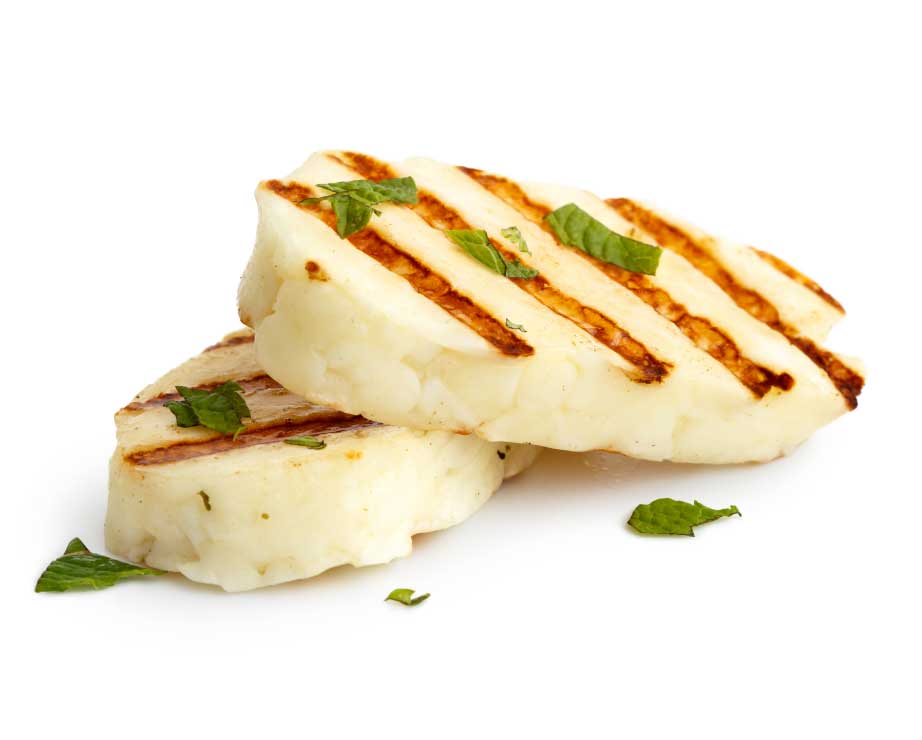
Halloumi and grilling cheese are often treated as the same thing, but there is an important distinction.
Halloumi is a specific cheese with Cypriot origins and a protected name, while “grilling cheese” is a broader term used for cheeses designed to hold their shape when cooked.
So, is grilling cheese the same as halloumi? Not necessarily.
Halloumi is one of the best-known grilling cheeses, but other cheeses can also be made specifically for grilling, frying or cooking at high temperatures. Depending on the product, these may differ in their milk source, flavour, texture, ingredients and production method.
For restaurants, takeaways, cafés and other food businesses, understanding the difference can help when choosing cheese for burgers, wraps, salads, skewers, breakfast dishes, sharing sides and vegetarian menus.
In this guide, we explain halloumi vs grilling cheese, what grilling cheese means, how the two compare, how to cook them and how food businesses can use them across their menus.
Halloumi vs Grilling Cheese: The Quick Answer
The simplest way to understand the difference is:
- Halloumi is a specific cheese traditionally associated with Cyprus.
- Grilling cheese is a broader category of cheese designed to withstand grilling, frying or other high-heat cooking.
- Halloumi is a type of grilling cheese, but not every grilling cheese is halloumi.
- Halloumi is known for its firm, chewy texture and salty, savoury flavour.
- Other grilling cheeses can be made from different types of milk and may have a milder or different flavour profile.
- The best choice depends on the recipe, customer expectations, menu positioning and product specification.
This distinction is particularly important when a menu or recipe specifically calls for halloumi rather than simply any cheese suitable for grilling.
What is Halloumi Cheese?
Halloumi is a traditional cheese associated with Cyprus and is particularly well known for its ability to retain its shape when grilled or fried.
It has a firm, springy texture and a characteristic savoury, salty flavour. When cooked, the outside can develop a golden surface while the centre remains pleasantly chewy.
Halloumi is commonly used in:
- Burgers
- Wraps
- Salads
- Breakfast dishes
- Skewers
- Sharing platters
- Mezze-style dishes
- Halloumi fries
- Vegetarian meals
For foodservice operators, this versatility makes halloumi useful across different menu categories rather than restricting it to one particular dish.
Explore Magna Foodservice’s halloumi cheese range.
What is Grilling Cheese?
Grilling cheese is a general term for cheese that can be cooked at relatively high temperatures while retaining enough structure to avoid simply melting into a liquid.
Unlike conventional cheeses that soften and melt quickly when heated, grilling cheeses are formulated or produced in a way that allows them to maintain their shape during cooking.
Depending on the product, grilling cheese may be:
- Grilled
- Pan-fried
- Barbecued
- Baked
- Cooked on a griddle
- Used on skewers
The exact characteristics vary between products, so food businesses should always follow the manufacturer’s cooking and storage instructions.
Is Grilling Cheese the Same as Halloumi?
No, not always.
Halloumi is a specific cheese, whereas grilling cheese is a broader category.
Think of it this way:
Halloumi → one type of cheese suitable for grilling
Grilling cheese → a broader category that can include halloumi and other heat-resistant cheeses
Some products marketed as grilling cheese may be designed to offer similar cooking performance to halloumi while using different milk, ingredients or production methods.
This is why checking the product specification is important when choosing a grilling cheese for a commercial kitchen.
Halloumi vs Grilling Cheese: Key Differences
| Feature | Halloumi | Grilling Cheese |
| What is it? | A specific traditional cheese associated with Cyprus | A broader category of cheeses suitable for grilling |
| Origin | Cyprus | Varies by product |
| Milk | Traditionally associated with sheep’s and goat’s milk, with some products also containing cow’s milk | Varies |
| Texture | Firm, springy and chewy | Varies from firm and chewy to softer |
| Flavour | Typically savoury and salty | Depends on the product |
| Cooking | Grilling, frying and other high-heat methods | Usually designed for grilling, frying or similar cooking |
| Melting behaviour | Holds its shape when cooked | Designed to retain structure when heated |
| Menu use | Burgers, wraps, salads, skewers, sides and more | Similar applications depending on the product |
| Product naming | Halloumi has a specific identity and protected status | “Grilling cheese” is a general product description |
The exact characteristics of any product should be checked against its packaging and supplier specification.
Why Doesn’t Halloumi Melt Like Other Cheese?
One of halloumi’s most recognisable characteristics is its ability to retain its structure during cooking.
Its protein structure and manufacturing process contribute to its distinctive cooking behaviour. Instead of melting and spreading like many conventional cheeses, halloumi can be grilled or pan-fried until it develops a golden exterior while maintaining its shape.
This makes it particularly useful when a menu requires a cheese that can be handled, cooked and served as a visible component of the dish.
That same characteristic is one reason halloumi has become popular in:
- Halloumi burgers
- Grilled halloumi wraps
- Halloumi skewers
- Halloumi salads
- Breakfast plates
- Halloumi fries
Halloumi vs Grilling Cheese: Taste and Texture
Taste can be one of the biggest differences between products.
Halloumi
Halloumi generally has a distinctive salty, savoury flavour and a firm, springy texture.
When grilled, the surface can become golden and slightly crisp while the inside remains chewy.
This texture is particularly useful in burgers and wraps because the cheese remains substantial rather than disappearing into the bread.
Other Grilling Cheeses
Grilling cheeses can have different flavour and texture profiles depending on how they are produced.
Some may be:
- Milder
- Less salty
- Softer
- Firmer
- More neutral in flavour
For food businesses, this can be useful when a recipe needs a cheese that provides texture without overpowering other ingredients.
Halloumi vs Grilling Cheese: Which is Better?
There is no universal winner.
The better option depends on the dish and what you want the cheese to contribute.
Choose halloumi when:
- You want the distinctive flavour of halloumi.
- The menu specifically calls for halloumi.
- You want a recognisable Mediterranean/Cypriot-inspired ingredient.
- You want a firm, chewy texture.
- You are creating halloumi burgers, salads, wraps or sides.
Consider another grilling cheese when:
- You want a different flavour profile.
- You need a particular milk type.
- You want a milder cheese.
- The recipe is designed around a specific grilling-cheese product.
- Cost, portion format or cooking performance makes another product more suitable.
For commercial kitchens, the right choice should also consider pack size, portion control, storage, cooking method and supplier specifications.
How to Cook Halloumi?
Halloumi is relatively straightforward to cook, but preparation can make a significant difference to the finished result.
- Slice the halloumi
Cut the cheese into evenly sized slices or pieces according to the recipe.
For burgers and wraps, thicker slices can provide a substantial bite. Smaller pieces can work well for salads, skewers and sharing dishes.
- Remove excess moisture
Pat the surface dry before cooking.
This can help improve browning and reduce excess moisture in the pan or on the grill.
- Use a hot cooking surface
Halloumi can be cooked on a grill, griddle or frying pan. Follow the product’s specific cooking instructions where available.
- Cook until golden
Turn the cheese as needed and cook until the surface develops the desired golden colour.
- Serve promptly
Halloumi is generally best served shortly after cooking, when the exterior is warm and browned, and the centre retains its characteristic texture.
Grilled vs Fried Halloumi
Both grilling and frying can produce excellent results, but they create slightly different finishes.
Grilled halloumi
Grilling can create attractive browned or charred marks and works particularly well for:
- Burgers
- Wraps
- Salads
- Skewers
- Sharing platters
Fried halloumi
Pan-frying can produce a more evenly browned exterior and is useful when a commercial kitchen does not have access to a grill or griddle.
Both methods can work well. The best method depends on the equipment, recipe and product instructions.
How to Use Halloumi on a Menu?

Halloumi is versatile enough to work across different parts of a foodservice menu.
- Halloumi Burgers
A grilled halloumi portion can be served inside a burger bun with lettuce, tomato, pickles and a suitable sauce.
For additional flavour, pair it with chilli jam, garlic mayo, BBQ sauce or another suitable condiment.
Explore Magna’s burger range for other menu components.
- Halloumi Wraps
Grilled halloumi works well with salad, flatbreads, sauces and fresh herbs.
A wrap can also be adapted with Mediterranean, Middle Eastern or spicy flavour profiles.
- Halloumi Salads
Combine warm grilled halloumi with lettuce, tomatoes, cucumber, peppers, olives and a suitable dressing.
The warm cheese provides a substantial element to an otherwise lighter dish.
- Halloumi Fries
Halloumi fries are a popular way to serve the cheese as a starter, side or sharing item.
They can be paired with dips or sauces and served as an alternative to traditional potato-based sides.
Explore Magna’s halloumi fries.
- Halloumi Skewers
Halloumi can be cut into pieces and combined with vegetables on skewers.
Peppers, onions, courgettes and other suitable vegetables can create colourful grilled dishes.
- Breakfast Dishes
Grilled halloumi can be added to breakfast plates, wraps and brunch dishes alongside ingredients such as eggs, tomatoes, avocado and bread.
Halloumi Menu Ideas for Takeaways
Halloumi can work particularly well in takeaway menus because it can be incorporated into familiar formats.
Consider:
- Halloumi burgers
- Halloumi wraps
- Halloumi fries
- Halloumi-loaded fries
- Grilled halloumi boxes
- Halloumi skewers
- Halloumi salad boxes
- Halloumi breakfast wraps
Using one core ingredient across several menu items can also make it easier to create variety while maintaining a manageable ingredient list.
Halloumi for Restaurants and Casual Dining
Restaurants can use halloumi in both vegetarian and mixed menus.
For example, a grilled halloumi starter can sit alongside meat and seafood starters, while a halloumi burger or salad can provide a substantial meat-free main option.
Halloumi also works well with Mediterranean-inspired ingredients such as:
- Tomatoes
- Olives
- Cucumber
- Peppers
- Fresh herbs
- Lemon
- Chilli
- Flatbreads
- Dips and sauces
Its firm texture also allows it to remain visually prominent on the plate.
Halloumi for Piri Piri, Burger and Fast-Food Menus
Halloumi can also be adapted to more casual food concepts.
A takeaway or quick-service restaurant could offer:
- Halloumi Burger
Grilled halloumi with salad and sauce in a toasted bun.
- Peri Peri Halloumi Wrap
Grilled halloumi combined with salad and a spicy sauce.
- Halloumi Fries
Crispy halloumi served with a choice of dips.
- Loaded Halloumi Fries
Halloumi fries combined with sauces, cheese or other suitable toppings.
This allows businesses to introduce a meat-free option without creating an entirely separate menu concept.
Is Halloumi Vegetarian?
Some halloumi products are suitable for vegetarians, but not all halloumi should automatically be assumed to be vegetarian.
The suitability depends on the ingredients and production method, including the type of rennet used.
If you are selling a dish as vegetarian, check the product label, specification or supplier information for the exact halloumi you are purchasing.
This is particularly important for foodservice businesses where dietary information needs to be accurate.
Is Halloumi Vegan?
Traditional halloumi is a dairy cheese, so it is not vegan.
A plant-based alternative would need to be specifically formulated and labelled as suitable for a vegan diet.
Do not describe conventional halloumi as vegan.
What Milk is Used to Make Halloumi?
Traditional halloumi has a strong association with sheep’s and goat’s milk.
However, commercially available products can have different milk compositions, including products containing cow’s milk.
If milk type matters for your menu or customer requirements, check the exact product specification rather than assuming all halloumi has the same milk composition.
Is Halloumi Greek or Cypriot?
Halloumi is traditionally associated with Cyprus, rather than Greece.
It has an important place in Cypriot food culture and is widely used in dishes served across the island.
Because halloumi is now popular internationally, you may see it used in Greek, Mediterranean and broader Middle Eastern-inspired menus, but its traditional cultural origin is Cyprus.
Why is Halloumi So Popular in the UK?
Halloumi has become increasingly familiar to UK consumers because it fits naturally into several established food trends and menu formats.
It offers:
- A substantial meat-free option
- A distinctive grilled texture
- Versatility across cuisines
- Strong visual appeal
- Easy integration into burgers, wraps and salads
- Suitability for starters, sides and mains
It also fits well into the UK’s growing range of vegetarian and flexitarian menu choices.
For food businesses, its versatility means one product can potentially be used across multiple dishes rather than being restricted to one recipe.
Halloumi and Foodservice Portion Control
For commercial kitchens, consistency matters as much as flavour.
When using halloumi across multiple menu items, consider:
- Standard slice or portion sizes
- Consistent cooking times
- Storage requirements
- Cooking equipment
- Recipe yield
- Waste during preparation
- Portion presentation
- The amount of sauce and garnish used
A standardised portion can make it easier to maintain consistent dishes across different shifts and locations.
How to Choose Halloumi or Grilling Cheese for Your Business?
When comparing halloumi with another grilling cheese, consider more than the name on the packaging.
- Check the product specification
Look at the ingredients, milk type, allergen information, storage instructions and cooking guidance.
- Consider the dish
A burger may require a thick, substantial slice, while a salad may work better with smaller grilled pieces.
- Consider flavour
Halloumi has a distinctive salty flavour. A milder grilling cheese may be more appropriate if you want the sauces and other ingredients to dominate.
- Consider cooking performance
Test the cheese using your actual grill, griddle or frying method before adding it permanently to a menu.
- Consider pack size and portioning
For foodservice, the right pack format can make a difference to preparation time, storage and waste.
- Consider your menu positioning
If the dish is specifically marketed as halloumi, use an appropriate halloumi product. If the recipe simply requires a grilling cheese, you may have more flexibility.
Why Halloumi Works Across Different Menus?
Halloumi’s biggest advantage for foodservice is versatility.
The same core product can be used in:
- Burgers
- Wraps
- Salads
- Breakfasts
- Skewers
- Mezze
- Sharing platters
- Halloumi fries
- Loaded fries
- Street-food dishes
This makes it possible to build several menu options around one ingredient while changing the supporting flavours and presentation.
Build Better Halloumi Dishes with Magna Foodservice
Halloumi can be much more than a single vegetarian menu item. Its firm texture, savoury flavour and ability to withstand high-heat cooking make it suitable for everything from burgers and wraps to salads, skewers, breakfasts and sharing dishes.
When choosing between halloumi and another grilling cheese, focus on the product specification, cooking performance, flavour profile and how the cheese fits your menu.
Magna Foodservice supplies halloumi and other cheese products for restaurants, takeaways, cafés and other food businesses.
Explore our halloumi cheese range and cheese range to find products for your menu.
For additional menu inspiration, explore our range of halloumi fries and other foodservice ingredients.
