
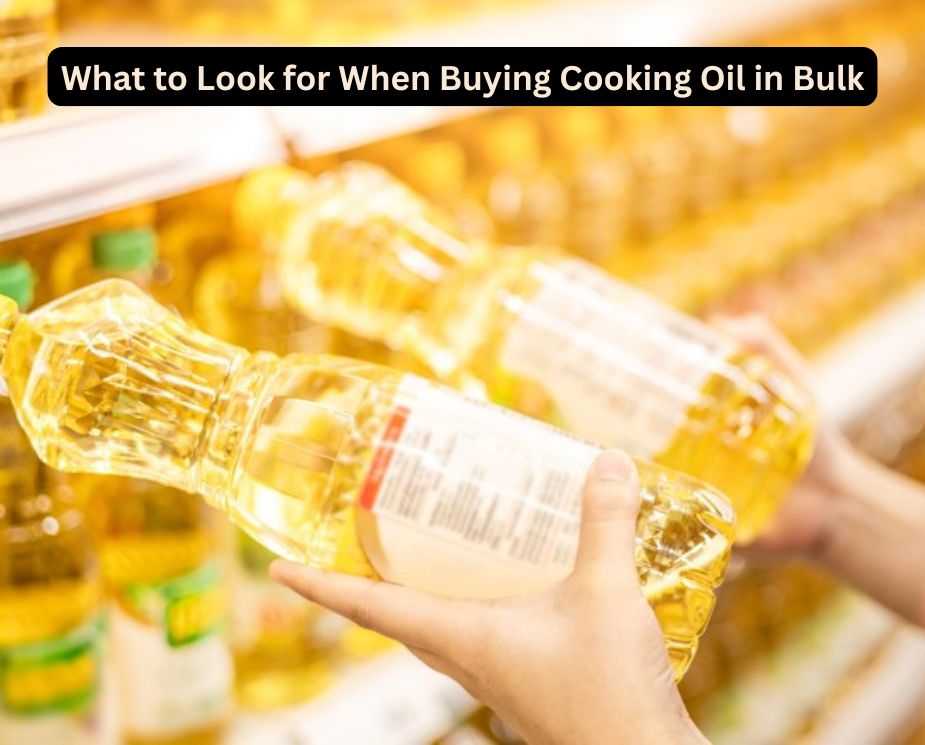
For restaurants, takeaways, and catering businesses, buying cooking oil in bulk is one of the most effective ways to control costs and ensure a steady supply.
When buying cooking oil in bulk, you should focus on quality, price per litre, packaging type, storage requirements, and supplier reliability. Making the right choice helps reduce waste, improve efficiency, and maintain consistent cooking performance.
With the right approach, bulk purchasing can significantly improve both profitability and kitchen operations.
Why Buying Cooking Oil in Bulk Makes Sense?
Bulk purchasing is common in commercial kitchens because it:
- Reduces cost per litre
- Ensures consistent supply
- Minimises frequent reordering
- Supports high-volume cooking
Explore our oil & fats for bulk options designed for foodservice businesses.
Key Factors to Consider When Buying Cooking Oil in Bulk
1. Oil Quality and Performance
Quality should always come first.
Look for oils that:
- Perform well at high temperatures
- Maintain consistency during repeated use
- Suit your cooking methods
High-quality oils last longer and improve food results.
2. Price Per Litre (Not Just Total Cost)
When buying in bulk, always calculate:
- Cost per litre
- Expected usage lifespan
- Value over time
A cheaper oil may not always be the most cost-effective if it degrades quickly.
3. Packaging Options
Bulk oil comes in different formats:
- Large bottles (5L-20L)
- Drums
- Full bulk supply systems
Choosing the right packaging depends on your kitchen size and usage.
For more details, see our guide on choosing the right oil packaging for your kitchen.
4. Storage Requirements
Bulk oil requires proper storage to maintain quality.
Consider:
- Cool, dry storage areas
- Protection from light and heat
- Safe handling systems
Poor storage can reduce oil lifespan and lead to waste.
5. Supplier Reliability
A reliable supplier ensures:
- Consistent product availability
- Timely delivery
- Stable pricing
Choosing the right supplier is just as important as choosing the right oil.
6. Type of Oil
Different oils serve different purposes:
- Vegetable oil → versatile and cost-effective
- Sunflower oil → clean taste and high heat tolerance
- Olive oil → flavour-focused applications
Matching oil type to usage improves efficiency and results.
Matching Bulk Oil to Your Kitchen Needs
1. High-Volume Kitchens
- Focus on the drum or bulk supply
- Prioritise cost efficiency
- Ensure strong storage systems
2. Medium Kitchens
- Use 10L-20L containers
- Balance cost and handling convenience
3. Smaller Kitchens
- Opt for manageable bulk sizes
- Avoid over-purchasing to prevent waste
Common Mistakes to Avoid
- Buying based only on price
- Ignoring storage capacity
- Choosing the wrong oil type
- Not considering the usage rate
These mistakes can lead to higher long-term costs.
How Bulk Buying Helps Reduce Costs?
When done correctly, bulk purchasing helps:
- Lower cost per litre
- Reduce delivery frequency
- Improve kitchen efficiency
- Maintain consistent cooking results
Combined with proper oil filtration and management, this can significantly boost profitability.
How Does This Fit Into Your Oil Strategy?
Buying in bulk works best when combined with:
- Proper oil filtration
- Understanding smoke points
- Choosing refined vs unrefined oils
- Cost management strategies
Together, these practices create a more efficient and profitable kitchen.
Conclusion
Buying cooking oil in bulk is a smart strategy for commercial kitchens, but only when done correctly. By focusing on quality, pricing, packaging, and supplier reliability, businesses can maximise value and minimise waste.
For a wide range of bulk cooking oils tailored for professional kitchens, explore our oil & fats category.
