
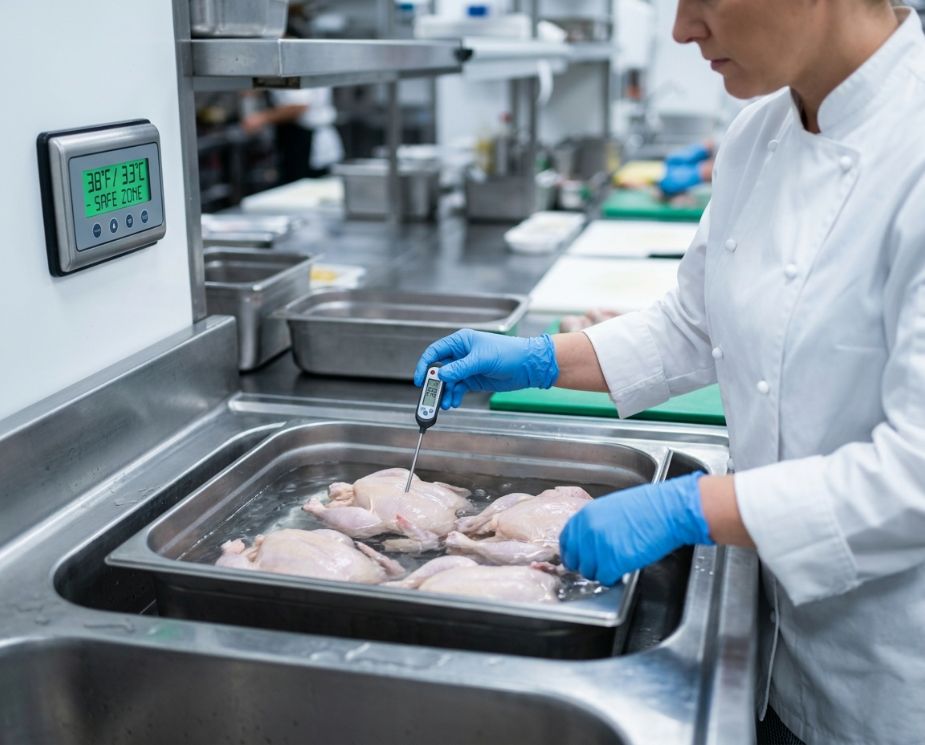
In commercial kitchens, handling poultry safely is essential to maintaining food quality and meeting hygiene standards. While many restaurants prefer fresh chicken, frozen poultry is also commonly used and must be defrosted correctly before cooking.
Improper defrosting can lead to bacterial growth, food safety risks, and inconsistent cooking results. That’s why professional kitchens must follow strict procedures when thawing poultry.
Many foodservice businesses rely on Magna Foodservice to source poultry products suitable for restaurant operations.
In this guide, we explain the best practices for defrosting poultry in professional kitchens and how to ensure safe and efficient food preparation.
Why Proper Defrosting is Important?
Defrosting poultry correctly is essential for both food safety and product quality.
Proper defrosting helps:
- Prevent bacterial growth
- Maintain chicken texture and flavour
- Ensure even cooking
- Reduce food waste
- Comply with food safety regulations
Restaurants sourcing poultry must follow safe handling procedures to maintain high standards.
1. Defrost Poultry in Refrigeration
The safest and most recommended method for defrosting poultry is in a refrigerator.
Key practices include:
- Keeping poultry at temperatures below 5°C during defrosting
- Allowing sufficient time for gradual thawing
- Placing poultry in leak-proof containers
- Storing it on the lowest shelf to prevent contamination
2. Avoid Defrosting at Room Temperature
Defrosting poultry at room temperature is unsafe and should never be done in commercial kitchens.
This method can:
- Encourage rapid bacterial growth
- Increase contamination risks
- Compromise food safety standards
Professional kitchens must always use controlled defrosting methods to ensure safe food preparation.
3. Use Cold Water Defrosting When Necessary
In situations where faster defrosting is required, poultry can be thawed using cold water.
Best practices include:
- Keeping poultry in sealed packaging
- Submerging it in cold (not warm) water
- Changing the water regularly
- Cooking immediately after thawing
This method is suitable for items such as chicken wings, which are often prepared in large quantities for takeaway menus.
4. Never Refreeze Defrosted Poultry
Refreezing poultry after it has been defrosted can affect both quality and safety.
Restaurants should:
- Only defrost the amount needed
- Avoid repeated freezing and thawing cycles
- Use defrosted poultry within the recommended timeframes
Following this practice helps maintain product integrity and reduces food safety risks.
5. Prevent Cross-Contamination During Defrosting
Defrosting poultry can create risks if juices from raw chicken come into contact with other foods or surfaces.
To prevent contamination:
- Use sealed containers or trays
- Keep poultry separate from other ingredients
- Clean and sanitise surfaces after handling
- Store poultry below ready-to-eat foods
6. Plan Defrosting as Part of Kitchen Workflow
Efficient kitchen operations require proper planning for defrosting poultry.
Restaurants should:
- Schedule defrosting in advance
- Align thawing with expected demand
- Monitor storage capacity
- Train staff on proper procedures
Reliable suppliers like Magna Foodservice help restaurants maintain a consistent poultry supply, reducing the need for last-minute defrosting.
Businesses can explore suitable poultry options through the fresh poultry category, ensuring they have the right products for their operations.
Conclusion
Proper defrosting is an essential part of safe poultry handling in professional kitchens. By following recommended practices such as refrigeration thawing, avoiding room temperature defrosting, and preventing cross-contamination, restaurants can maintain food safety and product quality.
Working with reliable suppliers like Magna Foodservice ensures access to high-quality poultry products that meet the needs of commercial kitchens.
Restaurants looking for fresh and frozen poultry options can explore the fresh and frozen poultry category to find suitable products for their menu requirements.
