
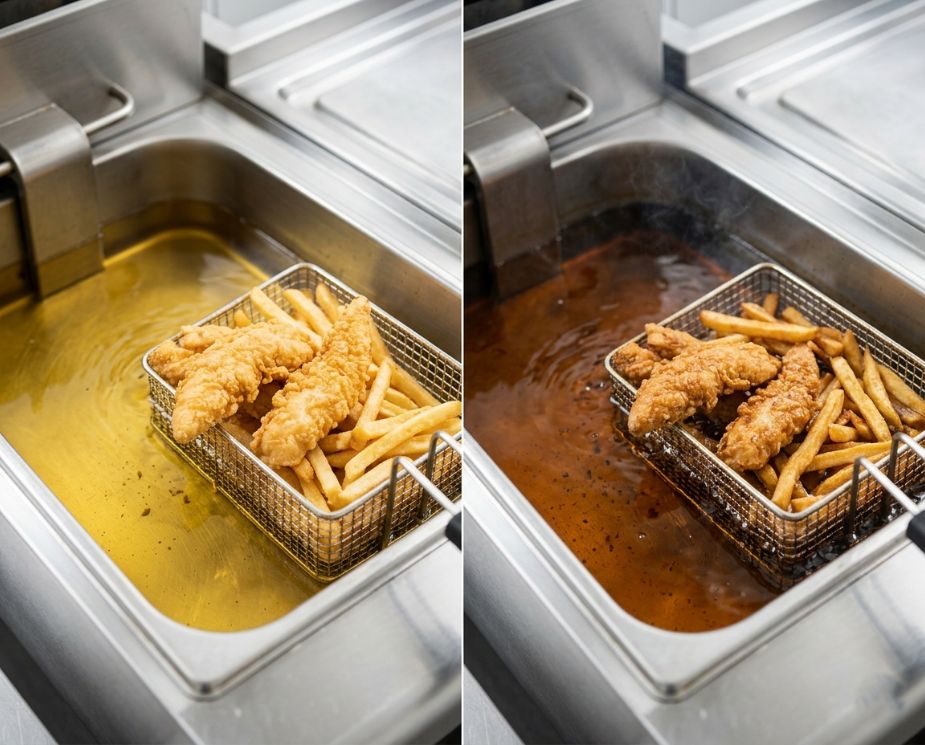
In a busy foodservice environment, managing frying oil properly is essential for maintaining food quality, controlling costs, and meeting hygiene standards. Whether you run a takeaway, restaurant, or catering business, knowing how often to change frying oil can directly impact both your profits and your reputation.
Using oil for too long can lead to poor-tasting food, a darkened appearance, and even potential health risks. On the other hand, changing oil too frequently increases unnecessary costs. Striking the right balance is key.
Why Frying Oil Management Matters?
Frying oil is one of the most heavily used ingredients in commercial kitchens. Over time, oil breaks down due to:
- High cooking temperatures
- Food particles and moisture
- Continuous reuse
Degraded oil can:
- Affect taste and texture
- Produce excessive smoke
- Lower frying performance
- Impact food safety standards
For businesses relying on consistent quality, proper oil management is not optional; it’s essential.
How Often Should You Change Frying Oil?
There is no one-size-fits-all answer, but in most professional kitchens:
- High-volume use (e.g., chip shops, takeaways): Change every 1-3 days
- Moderate use (restaurants): Change every 3-5 days
- Low use: Change weekly or as needed
However, frequency depends on several key factors.
Key Factors That Affect Oil Lifespan
1. Type of Food Being Fried
Foods like battered fish or breaded chicken release more particles into the oil, causing it to degrade faster compared to plain chips.
This is why choosing the right oil is important for performance and longevity.
2. Frying Temperature
Consistently overheating oil accelerates breakdown. Maintaining proper frying temperatures helps extend oil life and ensures better cooking results.
3. Filtration Practices
Regular filtration removes food debris and significantly extends oil usability.
Kitchens that filter oil daily can often extend usage by 30-50%.
4. Type and Quality of Oil
Different oils have different smoke points and stability levels. High-quality oils designed for commercial use tend to last longer under pressure.
Explore suitable options in our:
- Vegetable oils
- Sunflower oils
- Olive oils for light frying and finishing
Signs Your Frying Oil Needs Changing
Instead of relying only on time, look for these clear indicators:
- Dark colour
- Thick or sticky texture
- Excessive foaming
- Smoking at lower temperatures
- Unpleasant odour
- Food tasting greasy or bitter
If you notice any of these, it’s time to replace your oil immediately.
Best Practices to Extend Oil Life
To maximise efficiency and reduce costs:
- Filter oil daily
- Avoid mixing old and new oil
- Skim food particles regularly
- Maintain consistent frying temperatures
- Store oil properly when not in use
These simple practices can significantly improve oil performance and reduce waste.
Choosing the Right Oil for Your Kitchen
Selecting the correct oil plays a major role in how often it needs to be changed. Commercial kitchens should prioritise:
- High smoke point oils
- Neutral flavour profiles
- Consistent quality across batches
For reliable supply and quality, explore our full range of cooking oils in the oil & fats category, including trusted products like KTC vegetable oil and other foodservice-friendly options.
Conclusion
Knowing how often to change frying oil is crucial for maintaining food quality, reducing operational costs, and ensuring compliance with hygiene standards.
By monitoring oil condition, following best practices, and choosing high-quality products, professional kitchens can achieve better results while maximising efficiency.
