
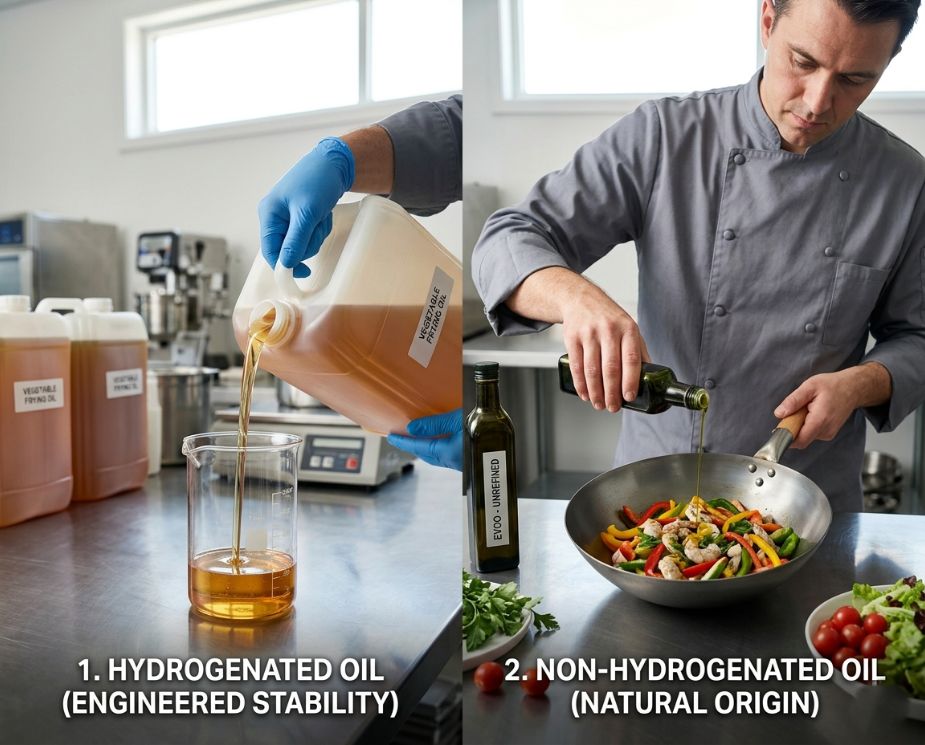
In modern foodservice, understanding what goes into your cooking oil is just as important as how you use it.
Hydrogenated oils are processed to improve stability and shelf life but may contain trans fats, while non-hydrogenated oils are less processed and generally considered a better option for health-conscious kitchens. Choosing the right type impacts not only performance but also customer perception and compliance.
For commercial kitchens, this knowledge helps balance cost, efficiency, and evolving customer expectations.
What are Hydrogenated Oils?
Hydrogenated oils are oils that have undergone a process where hydrogen is added to liquid oil to make it more solid and stable.
Key Characteristics:
- Longer shelf life
- More resistant to oxidation
- Improved texture in certain applications
- May contain trans fats (depending on processing)
These oils were traditionally used to improve durability in food production.
What are Non-Hydrogenated Oils?
Non-hydrogenated oils are natural or minimally processed oils that do not go through hydrogenation.
Key Characteristics:
- No added hydrogen
- Typically free from artificial trans fats
- More natural composition
- Increasingly preferred in modern foodservice
These oils are now widely used in commercial kitchens due to changing health standards.
Key Differences Between Hydrogenated and Non-Hydrogenated Oils
| Feature | Hydrogenated Oils | Non-Hydrogenated Oils |
| Processing | Chemically altered | Minimal processing |
| Shelf Life | Longer | Moderate |
| Stability | Very stable | Naturally stable (varies) |
| Health Perception | Less favourable | More favourable |
| Trans Fats | May contain | Typically none |
Why This Matters in Foodservice?
1. Changing Customer Expectations
Today’s customers are more aware of ingredients and expect:
- Cleaner labels
- Better-quality cooking oils
- Transparency in food preparation
Using non-hydrogenated oils can improve brand perception and customer trust.
2. Compliance and Industry Standards
Many regions have strict regulations around trans fats and hydrogenated oils.
Commercial kitchens must:
- Stay compliant with food safety standards
- Be aware of ingredient sourcing
- Choose oils that meet current guidelines
3. Cooking Performance
Hydrogenated oils:
- Offer stability and consistency
- Perform well in certain applications
Non-hydrogenated oils:
- Provide more natural performance
- Works well across most commercial cooking methods
Choosing the right oil depends on your specific kitchen needs.
4. Cost vs Perception Balance
Hydrogenated oils may:
- Last longer
- Offer cost advantages in some cases
Non-hydrogenated oils:
- Align with modern health trends
- Improve customer perception
Many kitchens now prioritise non-hydrogenated options for long-term brand value.
Choosing the Right Oil for Your Kitchen
1. Consider Your Cooking Needs
- High-volume frying → Stable, high-performance oils
- Cold applications → Natural, flavour-rich oils
- General cooking → Balanced, versatile oils
2. Focus on Quality and Source
High-quality oils:
- Deliver consistent results
- Improve food quality
- Support better kitchen efficiency
Explore reliable options in our oil & fats category, including vegetable, sunflower, and olive oils suitable for professional kitchens.
Common Mistakes to Avoid
- Ignoring ingredient labels
- Choosing oil based only on price
- Not considering customer expectations
- Overlooking compliance requirements
These mistakes can affect both reputation and long-term success.
How Does This Connect to Other Oil Decisions?
Understanding hydrogenation works alongside:
Combining these insights helps kitchens make smarter, more strategic decisions.
Conclusion
The difference between hydrogenated and non-hydrogenated oils plays an important role in modern foodservice. While hydrogenated oils offer stability, non-hydrogenated options align better with current health standards and customer expectations.
By choosing the right oils, commercial kitchens can effectively balance performance, compliance, and brand perception.
For a wide selection of high-quality cooking oils, explore our oil & fats category designed for professional kitchens.
