
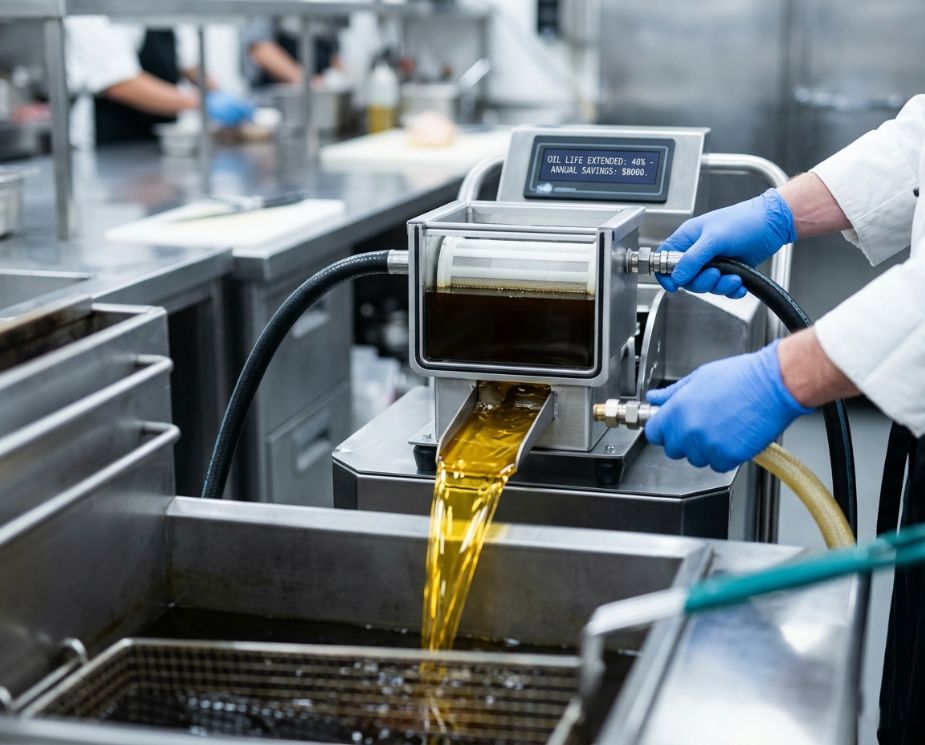
In high-volume commercial kitchens, frying oil is constantly exposed to heat, food particles, and moisture, all of which reduce its lifespan and performance.
Oil filtration is one of the most effective ways to extend oil life, improve food quality, and reduce overall kitchen costs. By removing debris and impurities, kitchens can reuse oil safely for longer without compromising results.
Understanding how oil filtration works and why it matters can help foodservice businesses operate more efficiently while protecting both quality and profit margins.
What is Oil Filtration?
Oil filtration is the process of removing food particles, carbon deposits, and other impurities from used frying oil. This is typically done using filtration machines or manual filtering systems designed for commercial kitchens.
Without filtration, these particles continue to burn in the oil, accelerating breakdown and affecting both taste and performance.
Why Oil Filtration Matters in Commercial Kitchens?
1. Improves Food Quality
Clean oil produces:
- Crispier textures
- Better colour
- More consistent taste
Dirty oil, on the other hand, can make food appear darker, greasier, and less appealing, directly impacting customer satisfaction.
2. Extends Oil Lifespan
One of the biggest advantages of filtration is that it allows kitchens to use oil for longer without compromising quality.
When paired with high-quality products, filtration can significantly improve oil durability.
3. Reduces Operational Costs
Frying oil is a major ongoing expense for many food businesses.
By filtering oil regularly:
- You reduce the frequency of oil replacement
- Lower overall purchasing costs
- Improve profit margins
For high-volume kitchens, this can result in substantial savings over time.
4. Maintains Kitchen Efficiency
Clean oil heats more evenly and performs better during service. This leads to:
- Faster cooking times
- Consistent output
- Less downtime
Efficiency is especially important in busy takeaways and restaurants where speed matters.
5. Supports Food Safety and Hygiene
Burnt particles in oil can increase the risk of contamination and negatively affect hygiene standards.
Regular filtration helps maintain:
- Cleaner cooking conditions
- Better compliance with food safety practices
- Reduced risk of off-flavours and odours
How Often Should You Filter Frying Oil?
For best results, commercial kitchens should:
- Filter oil at least once per day
- In high-volume environments, filter oil multiple times daily
Combining filtration with proper oil management delivers the best results.
Types of Oil Filtration Methods
1. Manual Filtration
- Basic and cost-effective
- Suitable for smaller kitchens
- Requires more labour
2. Built-In Fryer Filtration Systems
- Integrated into modern fryers
- Easy to use
- Saves time during busy shifts
3. Portable Filtration Machines
- Ideal for larger operations
- Efficient and consistent
- Handles high oil volumes
Best Practices for Effective Oil Filtration
To maximise the benefits of filtration:
- Filter oil while it is still warm (but safe to handle)
- Remove large food particles before filtering
- Clean filtration equipment regularly
- Avoid mixing heavily degraded oil with filtered oil
- Use high-quality oils designed for repeated use
Explore our range of vegetable oils, sunflower oils, and bulk cooking oils to ensure optimal frying performance.
Choosing the Right Oil for Better Filtration Results
Not all oils respond the same way to filtration. High-quality, stable oils:
- Break down more slowly
- Filter more effectively
- Deliver consistent results over time
For best performance, choose reliable products such as:
- KTC Vegetable Oil
- Bulk sunflower oil options
- Professional-grade cooking oils
Conclusion
Oil filtration is not just a maintenance task; it’s a smart business strategy. By keeping oil clean, commercial kitchens can improve food quality, extend oil lifespan, and significantly reduce operating costs.
When combined with proper oil selection and handling practices, filtration becomes a powerful tool for efficiency and profitability.
