
Food waste is a major challenge for restaurants, takeaways, and catering businesses across the UK. When working with perishable ingredients like fresh chicken, poor storage or inefficient planning can lead to unnecessary waste and increased costs.
Reducing food waste not only improves profitability but also supports more sustainable kitchen operations.
Many foodservice businesses rely on Magna Foodservice to source fresh poultry products in quantities that match their operational needs.
In this guide, we explore practical strategies for reducing food waste when working with fresh chicken in commercial kitchens.
Why Reducing Chicken Waste is Important?
Minimising food waste is essential for both financial and operational reasons.
Reducing poultry waste helps restaurants:
- Lower food costs
- Improve profit margins
- Maintain consistent inventory
- Support sustainability goals
- Improve kitchen efficiency
Restaurants sourcing fresh poultry can better manage stock levels by choosing suitable quantities and cuts.
1. Accurate Demand Forecasting
One of the most effective ways to reduce waste is to order poultry based on realistic demand.
Restaurants should:
- Analyse past sales data
- Adjust orders based on peak and off-peak periods
- Avoid overstocking perishable items
- Plan menus around expected customer demand
Working with a reliable supplier like Magna Foodservice allows businesses to maintain flexible ordering and avoid excess stock.
2. Proper Storage and Refrigeration
Incorrect storage is a leading cause of food waste in commercial kitchens.
To extend the shelf life of fresh chicken:
- Store poultry at temperatures below 5°C
- Keep raw chicken in sealed packaging
- Place poultry on the lowest refrigerator shelves
- Avoid overloading refrigeration units
Products such as chicken fillet should always be stored correctly immediately after delivery to maintain freshness.
3. Implementing FIFO Stock Rotation
FIFO (First In, First Out) is a simple but highly effective inventory management system.
By using older stock first, restaurants can:
- Prevent poultry from expiring
- Maintain consistent product quality
- Reduce unnecessary waste
- Improve kitchen organisation
FIFO is especially important when handling high-demand items like chicken wings, which are frequently used in takeaway menus.
4. Portion Control and Menu Planning
Controlling portion sizes is essential for reducing waste.
Restaurants can minimise waste by:
- Standardising portion sizes across menu items
- Training staff on portion control
- Designing menus that use similar ingredients
- Avoiding excessive serving sizes
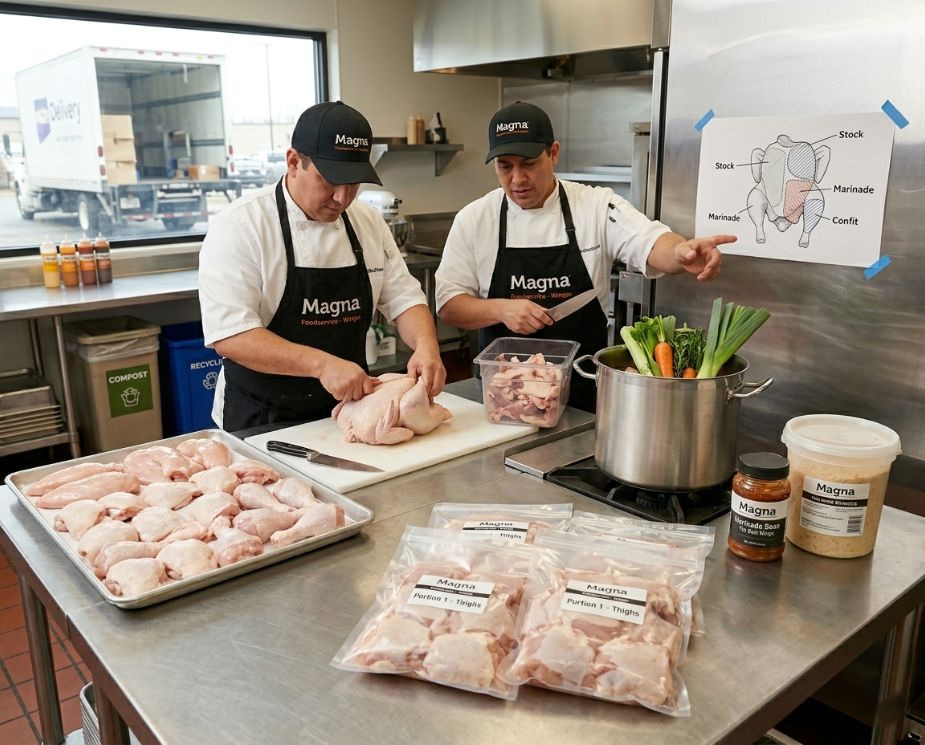
For example, a whole chicken can be efficiently portioned into multiple menu items, maximising its value.
5. Using the Whole Chicken Efficiently
Maximising ingredient usage is key to reducing waste.
Restaurants can use different parts of the chicken for various dishes:
- Fillets for burgers and wraps
- Wings for starters and sides
- Bones for stocks and broths
- Trimmings for sauces or fillings
This approach ensures that every part of the poultry is utilised effectively.
Businesses sourcing poultry can access different cuts suited for efficient menu planning.
6. Staff Training and Kitchen Practices
Well-trained staff play a critical role in reducing food waste.
Restaurants should ensure that kitchen teams:
- Follow proper storage procedures
- Understand portion control guidelines
- Handle poultry carefully to avoid damage
- Monitor expiry dates and stock levels
Consistent training helps maintain efficient kitchen operations and reduces unnecessary waste.
7. Working with Reliable Poultry Suppliers
A dependable supplier can help restaurants manage stock more effectively.
Reliable foodservice suppliers provide:
- Consistent product quality
- Proper packaging for freshness
- Flexible ordering options
- Timely deliveries
Many restaurants across the UK choose Magna Foodservice because it offers poultry products suitable for commercial kitchens and high-volume operations.
Businesses can explore bulk poultry options through the fresh poultry category to find suitable products for their needs.
Conclusion
Reducing food waste when working with fresh chicken is essential for improving profitability, maintaining efficiency, and supporting sustainable restaurant operations.
By implementing proper storage practices, using FIFO systems, controlling portions, and sourcing poultry from reliable suppliers like Magna Foodservice, restaurants can significantly minimise waste.
Businesses looking to optimise their poultry supply can explore the fresh poultry category to find fresh chicken products tailored for commercial kitchens.
