
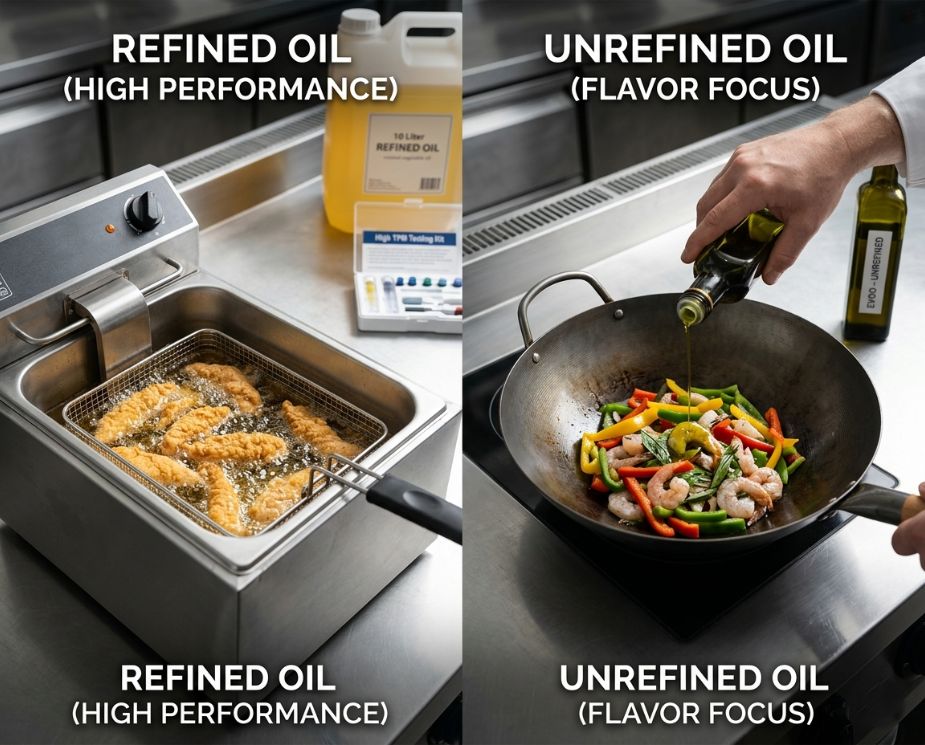
In commercial kitchens, the type of oil you use can significantly affect cooking performance, flavour, and overall efficiency.
Refined oils are processed to remove impurities, making them more stable and suitable for high-heat cooking, while unrefined oils retain natural flavours and nutrients but are better suited for low-heat or cold applications. Choosing the right type depends on how the oil will be used in your kitchen.
Understanding this difference helps foodservice businesses make smarter decisions that improve both quality and cost efficiency.
What are Refined Oils?
Refined oils go through processing methods such as filtering, bleaching, and deodorising to remove impurities.
Key Characteristics
- High smoke point
- Neutral flavour
- Longer shelf life
- More stable under heat
These qualities make refined oils ideal for demanding commercial kitchen environments.
What are Unrefined Oils?
Unrefined oils are minimally processed and retain their natural characteristics.
Key Characteristics
- Stronger flavour
- Lower smoke point
- Richer aroma
- Less processing
These oils are often used where flavour is important rather than heat performance.
Key Differences Between Refined and Unrefined Oils
| Feature | Refined Oils | Unrefined Oils |
| Processing | Highly processed | Minimally processed |
| Smoke Point | High | Low to medium |
| Flavour | Neutral | Strong and natural |
| Shelf Life | Longer | Shorter |
| Best Use | Frying, high-heat cooking | Dressings, finishing |
Why This Difference Matters in Foodservice?
1. Cooking Performance
Refined oils perform better in:
- Deep frying
- Stir frying
- High-volume cooking
Their stability makes them essential for busy kitchens.
2. Food Quality and Flavour
Unrefined oils are ideal when flavour matters most:
- Salad dressings
- Cold dishes
- Finishing touches
For example, olive oil is often used to enhance taste rather than for frying.
3. Cost Efficiency
Refined oils:
- Last longer
- Require less frequent replacement
- Offer better value in high-volume kitchens
Explore cost-effective options in our oil & fats category designed for foodservice use.
4. Menu Versatility
Using both types of oils allows kitchens to:
- Handle high-heat cooking efficiently
- Create flavourful dishes
- Improve menu quality
Choosing the Right Oil for Your Kitchen
Use Refined Oils For:
- Deep frying
- Stir frying
- Grilling
- High-volume cooking
Common options include vegetable oil and sunflower oil.
Use Unrefined Oils For:
- Salad dressings
- Cold dishes
- Low-heat cooking
Olive oils are a popular choice for these applications.
Common Mistakes to Avoid
- Using unrefined oils for high-heat cooking
- Ignoring smoke point differences
- Choosing oil based only on price
- Not matching the oil type to the cooking method
These mistakes can reduce efficiency and affect food quality.
How Does This Connect to Oil Management?
Understanding refined vs unrefined oils works alongside:
- Smoke point knowledge
- Oil filtration practices
- Cost-saving strategies
Combining these factors helps kitchens operate more efficiently and profitably.
Conclusion
The difference between refined and unrefined oils is more than just processing; it directly impacts cooking performance, flavour, and cost efficiency in commercial kitchens.
By selecting the right oil for each application, foodservice businesses can improve results, reduce waste, and deliver better quality to their customers.
For reliable supply and a wide range of options, explore our oil & fats category tailored for professional kitchens.
