
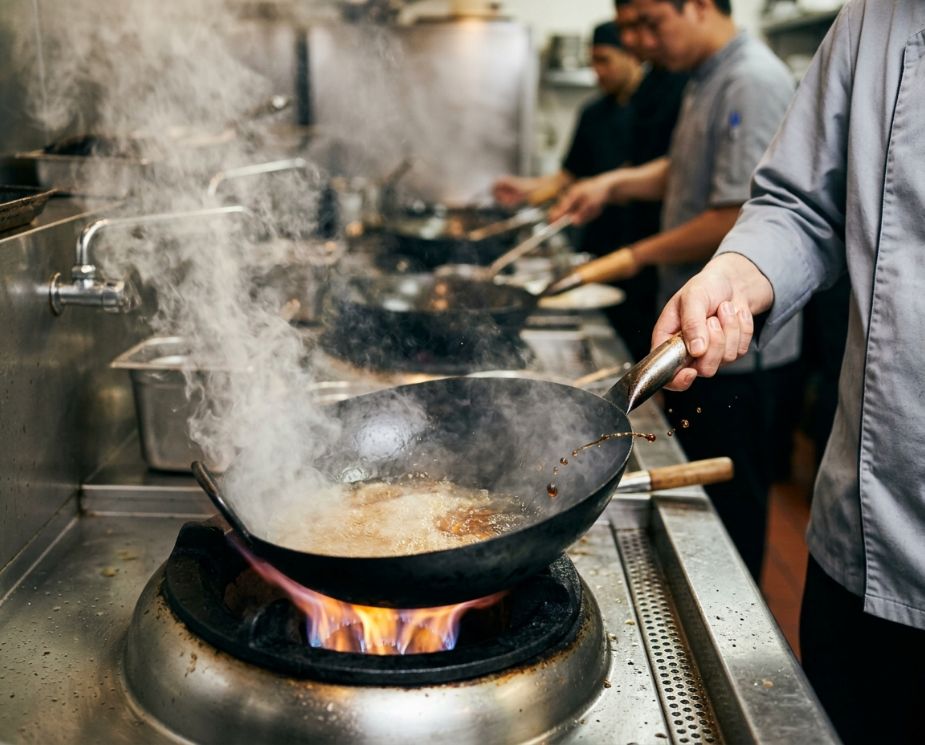
In commercial kitchens, choosing the right cooking oil is not just about cost or availability; it’s about performance under heat.
The smoke point of an oil is the temperature at which it begins to break down and produce smoke. Oils with higher smoke points are better suited for frying and high-heat cooking, while lower smoke point oils are ideal for dressings and light use.
Understanding smoke points helps professional kitchens improve food quality, extend oil life, and avoid unnecessary waste.
What is a Smoke Point?
The smoke point is the temperature at which oil starts to:
- Break down chemically
- Release visible smoke
- Produce unpleasant flavours
Once oil reaches this stage, it becomes less effective for cooking and can negatively affect food quality.
Why Smoke Points Matter in Commercial Kitchens?
1. Food Quality and Taste
When oil exceeds its smoke point:
- Food can taste burnt or bitter
- Texture may be affected
- Appearance becomes darker and less appealing
2. Oil Lifespan
Using oil beyond its smoke point accelerates degradation, meaning:
- Oil needs to be replaced more often
- Costs increase
- Efficiency decreases
Proper oil selection helps reduce how often oil needs to be changed.
3. Kitchen Safety
Excessive smoke can:
- Create an unpleasant working environment
- Increase fire risks
- Trigger ventilation issues
Maintaining proper temperatures and using suitable oils helps improve safety.
Smoke Point Categories Explained
1. High Smoke Point Oils (Best for Frying)
These oils can withstand high temperatures, making them ideal for:
- Deep frying
- Stir frying
- High-volume cooking
Examples include:
- Vegetable oil
- Sunflower oil
- Blended cooking oils
Explore high-performance options in our vegetable oils and sunflower Oils ranges within the oil & fats category.
2. Medium Smoke Point Oils (Versatile Use)
Suitable for:
- Light frying
- Sautéing
- General cooking
These oils offer a balance between flavour and heat tolerance.
3. Low Smoke Point Oils (Best for Cold Use)
Ideal for:
- Salad dressings
- Finishing dishes
- Low-heat applications
Example:
- Olive oil (especially extra virgin)
Browse our olive oils range for premium cold-use applications.
Approximate Smoke Points of Common Oils
| Oil Type | Approximate Smoke Point |
| Vegetable Oil | High |
| Sunflower Oil | High |
| Olive Oil | Medium to Low |
| Blended Oils | Medium to High |
(Exact values may vary depending on refinement and quality.)
Choosing the Right Oil Based on Smoke Point
1. Match Oil to Cooking Method
- Deep frying → High smoke point oils
- Stir frying → High smoke point oils
- Salad dressings → Low smoke point oils
This ensures optimal performance and food quality.
2. Consider Kitchen Volume
High-volume kitchens should prioritise:
- Durable oils
- Cost-effective options
- Bulk availability
Browse our full oil & fats category to find oils suited for your kitchen operations.
3. Balance Cost and Performance
Higher smoke point oils:
- Last longer
- Perform better under stress
- Reduce replacement frequency
This makes them more cost-effective over time.
Common Mistakes to Avoid
- Using low-smoke-point oils for frying
- Overheating oil beyond safe limits
- Reusing degraded oil repeatedly
- Ignoring signs of oil breakdown
These mistakes can lead to poor results and higher costs.
How Smoke Point Links to Oil Management?
Understanding smoke points works together with:
- Oil filtration practices
- Oil change frequency
- Proper temperature control
For best results, combine this knowledge with:
- Oil filtration techniques
- Cost-saving strategies
- Proper oil handling
Conclusion
Smoke points play a critical role in how cooking oils perform in professional kitchens. By choosing the right oil for each application, businesses can improve food quality, extend oil lifespan, and reduce costs.
For consistent results and reliable performance, it’s essential to source high-quality oils designed for foodservice environments.
